

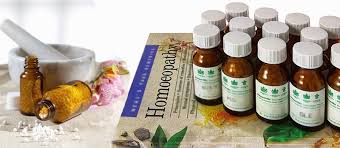
U.S. retail sales of homeopathic and herbal remedies reached $6.4 billion in 2012, up almost 3% from 2011, and growing 16% over the past five years, according to Chicago, IL-based market research firm Mintel. Today, 30% of respondents who suffered from an ailment within the past year claim to have used a homeopathic or herbal remedy as a treatment. Mintel forecasted sales to increase to $7.5 billion by 2017 as more Americans become proactive about their health. Further growth is fuelled by availability of these products in mass retailers.
Despite overwhelming evidence that homeopathy “remedies” are placebos at best, why are so many people still drawn to it? It plays on people’s emotions and a desire for a quick fix, based on the mistaken belief that conventional medicine does not work, and that “old-fashioned” remedies are best. Another factor is the growing disillusionment with the deceitful practices of pharmaceutical companies, whose overpriced medications often do not provide a cure, and can leave people in a worse condition due to many side effects. Pharmaceutical firms are also known to engage in deceptive research tactics to hide harmful side effects, which has led to people seeking alternatives, and homeopathy practitioners are taking advantage of that, marketing homeopathy as a “medicine”.
Where did it begin
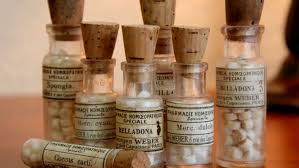
Samuel Hahnemann (1755-1843), a German physician, began formulating homeopathy’s basic principles in the late 1700s. Hahnemann was concerned that bloodletting, leeching, purging, and other procedures of his day did more harm than good. Thinking that these treatments were intended to “balance the body’s ‘humors’ by opposite effects,” he developed his “law of similars”—a notion that symptoms of disease can be cured by extremely small amounts of substances that produce similar symptoms in healthy people when administered in large amounts. The word “homeopathy” is derived from the Greek words homoios (similar) and pathos (suffering or disease).
Hahnemann and his followers conducted “provings” in which they administered herbs, minerals, and other substances to healthy people and kept detailed records of what they observed. These records were compiled into reference books called materia medica, which are used to match a patient’s symptoms with a “corresponding” drug.
Hahnemann declared that diseases represent a disturbance in the body’s ability to heal itself and that only a small stimulus is needed to begin the healing process. He also claimed that chronic diseases were manifestations of a suppressed itch (psora), a kind of miasma or evil spirit. At first, he used small doses of accepted medications. Later, he used enormous dilutions and theorized that the smaller the dose, the more powerful the effect—a notion commonly referred to as the “law of infinitesimals.” That is the opposite of the dose-response relationship that pharmacologists have demonstrated.
Homeopathic products are made from minerals, botanical substances, and other sources. If the original substance is soluble, one part is diluted with either nine or ninety-nine parts of distilled water and/or alcohol. If insoluble, it is finely ground and mixed in similar proportions with powdered lactose (milk sugar). One part of the diluted “medicine” is then further diluted, and the process is repeated until the desired concentration is reached. Dilutions of 1 to 10 are designated by the Roman numeral X (1X = 1/10, 3X = 1/1,000, 6X = 1/1,000,000). Similarly, dilutions of 1 to 100 are designated by the Roman numeral C (1C = 1/100, 3C = 1/1,000,000, and so on). Most remedies today range from 6X to 30X, but products of 30C or more are marketed.
A 30X dilution means that the original substance has been diluted 1,000,000,000,000,000,000,000,000,000,000 times. Assuming that a cubic centimeter of water contains 15 drops, this number is greater than the number of drops of water that would fill a container more than 50 times the size of the Earth. Homeopathy’s “law of infinitesimals” is the equivalent of saying that any drop of water subsequently removed from that container will possess an essence of the original substance, a proven fallacy.
Following is an extract from the Australian National Health and Medical Research Council report into homeopathy, released in 2015.
Scope
NHMRC assessed the evidence on homeopathy to answer this question: Is homeopathy an effective treatment for health conditions, compared with no homeopathy, or compared to other treatments?
NHMRC did not consider any of these types of evidence:
laboratory studies
studies in animals
studies in humans without a specific health condition, including: studies investigating whether or not homeopathy is effective for preventing health conditions
evidence about homeopathic ‘vaccines’
whether homeopathy is good for general health and wellbeing
The focus of the assessment of the evidence was on the effectiveness of homeopathic medicines, not their safety.
Why did NHMRC conduct an assessment of homeopathy?
NHMRC is responsible for supporting health and medical research as well as providing Australians with advice based on the best available evidence. This advice assists people in making informed decisions about their health care. This includes providing advice about the use of conventional therapies, as well as complementary and alternative medicines or traditional practices which, despite their longstanding history of use, may not have been demonstrated to be effective.
Many health care practices and products are promoted as beneficial to health when there is little or no evidence to support these claims. In some cases these claims may mislead people to reject practices and treatments that are proven to be effective, in favor of non-evidence-based treatments.
People who use homeopathy need to understand the potential benefits and risks to enable them to make an informed decision. Health practitioners also need to know what homeopathy is, be aware of the current scientific evidence from research on homeopathy, and understand any possible benefits and risks to patients—particularly when people decide to use homeopathy instead of other evidence‑based treatments.
For these reasons, NHMRC undertook an assessment of the evidence to provide Australians with reliable information on the effectiveness of homeopathy.
What is homeopathy?
Homeopathy is a type of complementary and alternative medicine. It is based on two premises:
That substances that may cause illness or symptoms in a healthy person can, in very small doses, treat those symptoms in a person who is unwell (‘like cures like’).
That highly diluted preparations retain a ‘memory’ of the original substance.
Homeopathic medicines are prepared by taking a substance (e.g. plant, animal material, or chemical) and repeatedly diluting it in water or alcohol. The container holding the preparation is then forcefully hit against a hand or a surface in a process known as ‘potentiation’ or ‘dynamisation’. Homeopathic medicines can include pellets placed under the tongue, tablets, liquids, ointments, sprays and creams.
Homeopaths provide either ‘individualised homeopathy’ or ‘clinical homeopathy’. In individualised homeopathy, the homeopath matches all the person’s symptoms to a single homeopathic medicine, rather than treating the person for a particular health condition using one or more homeopathic medicines. In clinical homeopathy, the homeopath chooses one or more homeopathic medicines to treat a particular health condition.
Homeopathy is commonly used around the world, however, there are no reliable estimates of Australians’ current use of homeopathic medicines. A 2009 World Health Organisation review on the safety of homeopathy reported that each year, Australians spend an estimated US $7.3 million on homeopathic medicines. Homeopathic medicines include pellets placed under the tongue, tablets, liquids, ointments, sprays and creams.
Methods
The National Health and Medical Research Council (NHMRC) undertook an assessment of the evidence of the effectiveness of homeopathy. This assessment was based on:
An overview of published systematic reviews by an independent contractor.
An independent evaluation of information provided by homeopathy interest groups and the public.
Consideration of clinical practice guidelines and government reports on homeopathy published in other countries.
The assessment of the evidence used standardized, accepted methods for assessing the quality and reliability of evidence for whether or not a therapy is effective for treating health conditions.
This work was overseen by the Homeopathy Working Committee established by the NHMRC. Given their collective expertise in evidence-based medicine, study design, and complementary and alternative medicine research, the Homeopathy Working Committee also provided advice on how the evidence should be interpreted in developing an Information Paper. An approach, similar to that of a Health Technology Assessment, was used to consider the outcomes of the assessment of the evidence. This means that for a treatment to be considered effective, it must result in health improvements that cannot be explained by the placebo effect, and these health improvements must be meaningful for a person’s overall health. There must be evidence that the health improvements in people taking the treatment are unlikely to be due to chance and the result must be seen consistently in several studies.
Evidence on homeopathy was collected by identifying systematic reviews which evaluated the effectiveness of homeopathy in treating health conditions in humans. In total, 57 systematic reviews were identified that contained 176 individual studies. Studies were only considered by NHMRC if they compared a group of people who were given homeopathic treatment with a similar group of people who were not given homeopathic treatment (controlled studies). For each health condition, the evidence reviewers assessed the quality of the systematic reviews using a standard, internationally accepted method, and recorded the number and type of studies that were included in the systematic reviews. Using the information provided by the systematic reviews, the reviewers also assessed the quality of each individual study and its number of participants, taking into account factors that could bias the results in favour of homeopathy, placebo or another treatment.
Additional information was submitted to NHMRC, for consideration as part of its review of homeopathy, by homeopathy interest groups and the public on two occasions: before the commissioned overview of evidence (preliminary submitted literature) and during the review of the draft Information Paper (public consultation submitted literature). The preliminary and public consultation submitted literature was assessed using a similar method to that applied in the overview.
Where a clinical condition had already been considered in the overview, the results from the submitted literature were compared to the conclusions of the overview to examine the consistency of results against the body of evidence. Where a clinical condition had not been considered in the overview, the results of the submitted literature were assessed with regards to their study design, size and different kinds of bias to see if any comment on the effectiveness of homeopathy could be made.
Findings
There was no reliable evidence from research in humans that homeopathy was effective for treating the range of health conditions considered: no good-quality, well-designed studies with enough participants for a meaningful result reported either that homeopathy caused greater health improvements than placebo, or caused health improvements equal to those of another treatment.
For some health conditions, studies reported that homeopathy was not more effective than placebo. For other health conditions, there were poor-quality studies that reported homeopathy was more effective than placebo, or as effective as another treatment. However, based on their limitations, those studies were not reliable for making conclusions about whether homeopathy was effective. For the remaining health conditions it was not possible to make any conclusion about whether homeopathy was effective or not, because there was not enough evidence.
Conclusions
Based on the assessment of the evidence of effectiveness of homeopathy, NHMRC concludes that there are no health conditions for which there is reliable evidence that homeopathy is effective.
Homeopathy should not be used to treat health conditions that are chronic, serious, or could become serious. People who choose homeopathy may put their health at risk if they reject or delay treatments for which there is good evidence for safety and effectiveness. People who are considering whether to use homeopathy should first get advice from a registered health practitioner. Those who use homeopathy should tell their health practitioner and should keep taking any prescribed treatments.
Read the full report here:
https://www.nhmrc.gov.au/_files_nhmrc/publications/attachments/cam02a_information_paper.pdf
3 Responses
I always find a site like your’s. So I am very satisfied with your site and also
I like your information a lot. You have done a good job on this category it
very help us. Thanks for sharing the best suggestions they amazing.
http://www.drankireddy.com/
Well, You gave us a clear information and tips also. I am very satisfied with
your site and also I like your instructions. they amazing and very help us.
Thanks for sharing the best posts they very useful to us.
http://www.drankireddy.com/
We are very excited about your site and your work on this topic, Thank you
for your support to us. we got a clear information and suggestions, they
very help us.
http://www.drankireddy.com/