

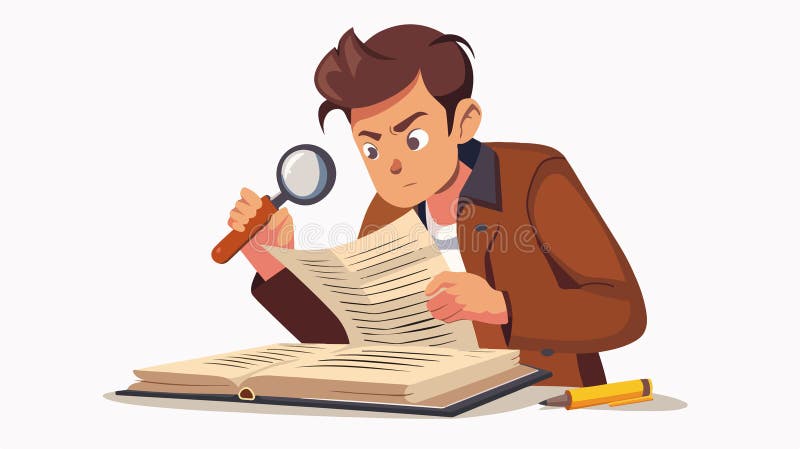
One of the most common misconceptions in writing is that editing and proofreading are interchangeable. Ask anyone outside the publishing industry what a professional does to polish a manuscript, and they will likely lump both tasks under the single umbrella of ‘fixing mistakes’.
However, a professional author, editor, or publisher will tell you that editing and proofreading are two fundamentally distinct phases of the writing process. They require different mindsets, target different levels of the text, occur at different times in a project’s timeline, and achieve entirely different goals.
Confusing the two—or attempting to do both at the same time—is a recipe for frustration, missed errors, and a weaker final product. Understanding the boundaries, overlap, and proper sequence of editing and proofreading is essential for anyone looking to publish clean, compelling work.
It does not matter whether you edit and proofread as you write your novel, or wait until you have a substantial number of pages, or do it when the whole thing is finished, you must understand the difference between editing and proofreading.
Part 1: Defining Editing
Editing is the deep, structural, and stylistic work that transforms a messy first draft into a coherent, engaging piece of writing. If writing a book is like building a house, editing is the stage where you knock down load-bearing walls, rearrange the layout of the rooms, reinforce the foundation, and repaint the interior walls so the space feels welcoming and structurally sound.
This process, however, can be significantly reduced if the author writes a detailed outline for the novel, with all the plot and sub-plot elements defined. The outline should be supported by a ‘rap’ sheet for every major character that lists vital statistics, mannerism, habits, likes and dislikes. This will help the author maintain character consistency.
You would not build a house without a plan. Don’t write a novel without an outline. An outline does not mean your novel will not change as you write. It will, but an outline gives you a firm structure to work from.
The Levels of Editing
Editing is rarely a single monolithic task. It is typically broken down into distinct layers that occur progressively:
- Structural or Developmental Editing: This is the ‘big picture’ phase. A developmental editor looks at the manuscript’s architecture. In fiction, this involves evaluating plot holes, characters, pacing, point-of-view consistency, and thematic resonance. In non-fiction, it involves organizing chapters, assessing the strength of arguments, and ensuring the logical flow of information. Entire chapters might be deleted, merged, or completely rewritten during this stage.
- Substantive or Line Editing: Once the structure is locked in, line editing focuses on the craft of sentences. A line editor works paragraph by paragraph and sentence by sentence to improve clarity, rhythm, word choice, and tone. They root out clunky phrasing, repetitive vocabulary, passive voice abuse, and overwritten prose.
- Copyediting: This sits right on the border between editing and proofreading. A copyeditor checks for internal consistency (did a character’s eyes change color from blue to green halfway through?), adheres to a specific style guide (such as The Chicago Manual of Style), flags factual inaccuracies, and corrects baseline grammar, punctuation, and syntax errors.
The Mindset of an Editor
An editor acts as a creative collaborator. They are deeply concerned with meaning, intent, and impact. When an editor reads your text, they are asking questions like: Does this scene earn its emotional payoff? Is the author’s voice shining through? Will the reader understand this argument? Because of this, editing is a creative and interpretive act that frequently changes the wording, structure, and substance of the text.
Part 2: Defining Proofreading
If editing is architectural renovation, proofreading is the final inspection before the building opens to the public.
A proofreader does not rewrite sentences, restructure paragraphs, or evaluate the strength of your narrative argument. They are not looking for creative solutions or trying to improve your voice. Instead, proofreading is a strict, highly focused quality-control check applied to a document that has already been fully edited and formatted.
What a Proofreader Looks For
By the time a manuscript reaches the proofreading stage, the content is supposed to be completely frozen. The proofreader acts as a safety net to catch stray mechanical errors that managed to survive earlier rounds, including:
- Typo and Spelling Mistakes: Transposed letters, double words (‘the the’), misspelled names, and incorrect homonyms (their vs. there).
- Punctuation Errors: Missing commas, mismanaged apostrophes, stray quotation marks, and incorrect dash usage.
- Formatting and Layout Inconsistencies: Errors introduced during typesetting or PDF conversion, such as mismatched header fonts, orphan lines, incorrect table or figure labels, and broken page numbers in the table of contents.
The Mindset of a Proofreader
A proofreader acts as a technician rather than a co-author. They operate with a laser-focused, literal eye, scanning text not for what it means, but for how it is represented on the page. They look for objective errors—instances where text violates established rules of grammar or spelling. If a sentence is grammatically correct and makes sense, a proofreader will leave it alone, even if an editor might have phrased it with more flair. Above everything else, a proofreader maintain objective distance from the story and his/her personal like or dislike for the work.
Part 3: Head-to-Head Comparison
To crystallize the differences between these two stages, consider how they stack up across key categories:
| Feature | Editing | Proofreading |
| Primary Objective | Improve clarity, flow, structure, and impact | Catch surface errors, typos, and layout flaws |
| Depth of Intervention | Deep and transformative (rewriting, moving sections) | Surface-level and light (fixing isolated mechanical mistakes) |
| Stage in Timeline | Early to middle stages of the writing process | The absolute final step before publication or submission |
| Core Questions Asked | Does this make sense? Is the tone right? Is the structure logical? | Is there a typo? Are the punctuation marks correct? Is the layout clean? |
| Who Performs It | Developmental, line, or copy editors | A dedicated proofreader (or the writer on a final pass) |
Part 4: Why Order Matters
One of the most catastrophic mistakes self-publishing authors make is attempting to proofread a document before it has been properly edited, or—worse—trying to edit and proofread simultaneously.
Editing must always come before proofreading.
The logic behind this rule is simple and economic: Editing changes text; proofreading polishes text.
Imagine spending hours meticulously proofreading a rough, unedited chapter. You hunt down every stray comma, fix every minor typo, and ensure every sentence is grammatically pristine. Then, a developmental editor reads the chapter and tells you that the entire scene needs to be deleted because it halts the momentum of the plot, or that a character’s dialogue needs to be completely rewritten to reflect a shift in their personality.
If you proofread first, all the time and energy you spent polishing those specific sentences is entirely wasted because those sentences are now gone. Furthermore, making structural edits and rewrites inevitably introduces new typos, grammatical slips, and inconsistencies.
Therefore, the standard publishing pipeline flows strictly in one direction:
- Drafting: Getting the raw words onto the page.
- Revising/Structural Editing: Shaping the story and arguments.
- Line/Copy Editing: Refining language, flow, and consistency.
- Typesetting/Formatting: Laying out the book into its final published design.
- Proofreading: Catching the final typographical ghosts hiding in the typeset pages.
Part 5: The Pitfalls of Self-Editing and Self-Proofreading
Writers are notoriously bad at editing and proofreading their own work, primarily due to a cognitive phenomenon called expectation bias.
When you stare at a manuscript you spent months writing, your brain doesn’t actually read what is on the page. Instead, your memory overrides your eyes. Your brain supplies the words you intended to write rather than the words you actually wrote. If you accidentally omitted a crucial word or left a sentence half-finished, your internal processing fills in the missing gap automatically. This makes spotting your own structural plot holes or missing articles nearly impossible without distance.
Strategies for Overcoming Self-Editing Blindness
If you want to edit and proofread your own work, you can mimic a multi-stage professional workflow by implementing strict procedures:
- Enforce Time Delays: Put your manuscript away for at least two weeks after finishing the draft. Return to it with ‘cold eyes’ so you can read it objectively.
- Change the Medium: Do not edit on the same screen or in the same font where you drafted the book. Print the manuscript out on physical paper, change the font style, or use text-to-speech software to have your computer read the text back to you. Hearing your words read aloud instantly exposes clunky dialogue, awkward phrasing, and run-on sentences.
- Separate Your Passes: Never try to check for character consistency and spelling mistakes in the same reading session. Dedicate one full pass exclusively to structural flow, a separate pass to line editing and word choice, and a final, distinct pass strictly for spelling and punctuation.
Using Proofreading Tools
Much has been written about using AI tools to help authors produce their work. Whatever the author might think about AI, he/she should not overlook the genuine benefit of using such tools while proofreading.
Grammarly is useful to trap incorrect word usage, grammar and punctuation errors, and those pesky little bloopers your eyes missed. The author must be wary following this tool’s ‘suggestions’, as they sometimes don’t make sense.
Using Google Gemini to proofread only, not rewrite, a block of writing is also a great way to polish a book.
Among others, ProWritingAid, Scribber, and EditGPT are also very useful tools.
Use them to proofread your manuscript, as each tool specializes in what aspects of writing it handles best. Once happy with the final manuscript, an author should consider submitting the work to a professional proofreader for a final check, because even an AI tool can miss something.
Conclusion
Editing and proofreading are two sides of the same coin, yet they occupy entirely different realms in the writing universe. Editing is creative, transformative, and structural; proofreading is technical, meticulous, and final.
Treating them as distinct, sequential steps in your writing routine ensures that your ideas are fully realized, your prose is sharply articulated, and your final manuscript reflects what you intended to write. By respecting the unique boundaries of editing and proofreading, you elevate your work from a rough collection of thoughts into a polished, professional piece of writing that commands the respect of readers and industry professionals alike.
Every author should learn to be their harshest editor and proofreader! Never get emotionally attached to your writing, and always be prepared to cut a word, sentence, or paragraph if this will produce a more polished work.
If you need an editor or proofreader, check out the Services page of my website. For more tips on writing, editing, publishing, and marketing, check out my Blog.