

Part 1: Is a Beta Reader Worth It?
Before investing weeks hunting down readers for your ready to publish novel, you must answer a serious question: Is this step worth doing?
Having spent months writing the book, self-editing and proofreading — see my article: Proofreading vs Editing https://www.stefanvucak.com/proofreading-vs-editing/ — you might very well think you are ready to unload your book on the world. Why spent time to seek beta readers who owe you no professional loyalty, invites criticism, superficial feedback, and occasionally outright rejection, which can be soul-crushing. Yet, for some authors, the beta reading step is vital to produce the best work you can. Others feel beta readers often provide only flattering feedback, not wanting to discourage you, which turns into a useless ego trip for you.
The Arguments Against Beta Reading
- The Time Sink: Managing beta readers takes weeks or months. You must wait for them to read, evaluate their feedback, and sort through conflicting notes. If a beta reader turns out to be useless, it will stall your publishing schedule.
- Conflicting Advice: One beta reader will tell you the pacing is lightning-fast; another will complain the middle drags, your characters are two-dimensional. If you try to please everyone, your story will lose its unique voice.
- The Emotional Toll: Receiving critical feedback hurts. Even constructive notes can trigger rejection, making you want to scrap the entire book.
- Premature Feedback Risk: If you send a messy, unpolished draft to a beta reader, they will waste time correcting commas instead of evaluating plot structure, leaving you frustrated and none the wiser.
- Unqualified Beta Reader: Is the feedback you receive of professional quality, or merely someone’s personal point of view?
The Arguments For Beta Reading
- Shattering Self-Delusion: You cannot spot your own plot holes because your brain automatically fills them in. Beta readers can act as fresh diagnostic eyes.
- Audience Validation: They tell you whether your target demographic will actually enjoy the book. Does the twist surprise them? Do they care if the protagonist lives or dies?
- Saving Money on Structural Editing: Professional developmental editors are expensive. While beta readers do not replace professional editors, they help you catch glaring structural issues before you pay someone thousands of dollars to fix them.
- Building Early Advocates: A good beta reader often transforms into an early street team member, review-leaver, or lifelong creative ally.
The Verdict: Regardless of what many articles claim, this is entirely an author’s personal choice, provided you are at the correct stage in your writing process. Never use beta readers for a first draft. Bring them in only when your manuscript has undergone multiple self-edits and you can honestly say, ‘This is the absolute best I can make it on my own.’
Part 2: Where and How to Find Beta Readers
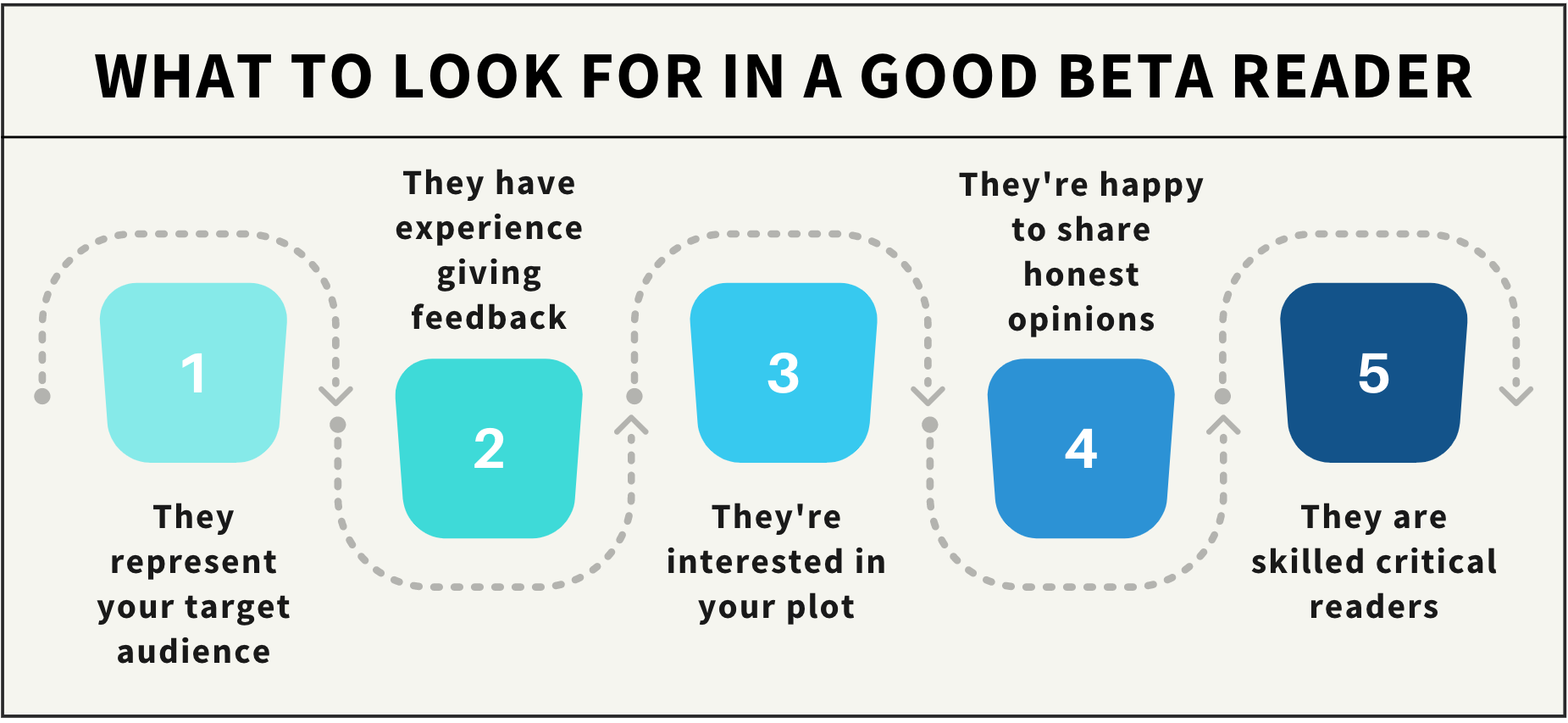
You need to find beta readers who are reliable, honest, and professional — they don’t need to be experts in your genre. Shy away from using friends and family to critique your work. They have an emotional bias that will slant their feedback because they fear to offend you.
- Dedicated Online Communities and Subreddits
The internet contains massive networks of writers and avid readers specifically configured for manuscript exchanges.
- Reddit: Communities like r/BetaReaders are premier hubs for matching authors with readers. You post a formal listing, your genre, word count, trigger warnings, hook/blurb, and what kind of feedback you need. In exchange, you either beta read for them or look for volunteers to read your work.
- Goodreads: It has groups with active beta-reading folders. However, be cautious regarding copyright before sending files. It is always wise to copyright your manuscript with the US Copyright Office before sending it to anyone — and show the copyright ID — although some authors claim this step is not necessary.
- Critique and Swap Platforms
Structured platforms streamline the process by enforcing accountability and tracking progress.
- Critique Circle / Scribophile: These are critique swap websites where you earn points by critiquing short pieces or chapters written by others, which you then spend to have your own work reviewed. They attract detail-oriented writers who understand story architecture.
- StoryOrigin / BetaBooks / BetaReader.io: These software tools help manage distribution, track who has finished reading, and collect structured questionnaires from your beta team.
- Reading Groups: Reading groups may provide honest feedback, but often, they are simply chat forums where members tell each other what great guys they are and their writing is super.
- Social Media and Writing Networks
BookTok, Bookstagram, and X (Twitter): Search tags like #BetaReadersNeeded, #WritingCommunity, or your genre tag (e.g., #SFFPit or #RomanceWriters). Building a genuine digital presence over time makes it much easier to attract peers who share your reading tastes.
- Writing Conferences and Local Guilds: In-person connections forged at workshops often yield the most stable, long-term beta relationships.
Part 3: The Vetting Process
Never send your entire 90,000-word manuscript to a stranger on the internet without a trial run. People ghost, life gets busy, and occasionally, bad actors attempt to appropriate your work.
- Step One: Send a query blurb with a request for their qualifications as a beta readers, then provide a synopsis and the first 5,000 words.
- Step Two: Ask them to evaluate the material within 48 to 72 hours using a couple of basic questions (e.g., Did the hook pull you in? Is the voice clear?).
- Step Three: Evaluate their response. Did they actually read it, or do they just offer vague praise (“It’s great!”)? Did they return it on time? If they pass the test chapter, you can safely send the full manuscript. If they flake or provide zero actionable insight, you have saved yourself weeks of waiting.
Part 4: Managing Beta Readers and Questionnaires
When you hand over your manuscript, do not just say, “Let me know what you think.” Open-ended requests usually yield unhelpful responses. Guide your readers with a Beta Reader Questionnaire.
Essential Questions to Include:
Pacing: Were there any chapters or scenes where you felt bored, bogged down, or tempted to skim?
- Character Engagement: Which character was your favorite? Did any character feel flat, unlikable, or confusing in their motivations?
- Plot and Logic: Did the ending feel earned? Were there any plot holes, or unresolved subplots?
- Setting and World-building: Could you clearly visualize the settings, or did you feel lost in the environment?
- The Hook: At what point did the book truly grab you? Did you ever consider putting it down and not picking it back up?
- Grammar: Are there any glaring grammar and word usage errors?
Give your readers a firm, realistic deadline (typically 4 to 6 weeks for a full-length novel). Emphasize that you want honest feedback, not polite platitudes.
Part 5: Processing the Feedback
Once the responses roll in, do not immediately rewrite your book. Put the feedback aside for a few days to let your emotional pulse settle.
When you return to analyze the notes, apply the Rule of Three:
- If one reader complains about a specific quirk or element, it is likely a matter of subjective taste. You can safely ignore it if it aligns with your artistic vision.
- If two or more readers point out the exact same confusion, pacing drag, or unconvincing character reaction, you have an objective structural problem that requires fixing.
Remember, beta readers are brilliant at diagnosing where a problem lives, but they are rarely right about how to fix it. Trust your instincts as the author to engineer the solution.
By treating beta reading as a rigorous, professional phase of development rather than an ego check, you enhance your book’s integrity.
Conclusion
A beta reader should be treated as simply another tool for an author to use … or not. They can be valuable in the writing process, but an author should balance feedback from a beta reader with his/her own judgment about the book and what the author wanted to say.
Using websites who demand that you exchange beta reading projects, or strive for reading credits/points, can be counterproductive for an author. You may spend a lot of energy reviewing someone’s work, which will distract from your aim to publish your book. If an author wants to use a beta reader, engage one in the same way you would use an editor or proofreader — on a project basis only.
Read more articles about writing, editing, publishing, and marketing on my Blog.