


Did you know that God gave Moses two different sets of commandments, and their origins came from Mesopotamia, not Mt. Sinai?
In the biblical account found in the book of Exodus, Moses brings down two separate sets of stone tablets from Mount Sinai, because he smashed the first set in anger when he discovered the Israelites worshiping the golden calf.
While traditional theology views both sets as containing the same Ten Commandments (with Deuteronomy 10:4 stating that the second set matched the first), biblical scholars point out that the text contains two distinct versions or traditions of what constitutes the foundational commandments.
Set 1: The Ethical and Theological Decalogue (Exodus 20 / Deuteronomy 5)
This is the familiar version traditionally memorized by many Jews and Christians. It focuses heavily on general moral behavior, monotheism, and the Sabbath.
You shall have no other gods before God.
You shall not make or bow down to carved idols.
You shall not misuse the name of the Lord.
Remember the Sabbath day and keep it holy.
Honor your father and mother.
You shall not murder.
You shall not commit adultery.
You shall not steal.
You shall not give false testimony against your neighbor.
You shall not covet your neighbor’s house, spouse, or property.
Set 2: The Ritual/Cultic Decalogue (Exodus 34)
When Moses cuts a new pair of stone tablets, God issues a second set of instructions to re-establish the covenant. Scholars often refer to this as the ‘Ritual Decalogue’ because, unlike the first set, these commands focus heavily on worship practices, agricultural festivals, and ritual purity rather than general ethics.
Do not make treaties with the inhabitants of the land you are entering.
Do not make any cast idols.
Celebrate the Passover-linked feast of unleavened bread.
Consecrate all firstborn males (human and animal) to God.
Rest on the seventh day (even during plowing and harvest).
Celebrate the Festival of Weeks (Pentecost) with the firstfruits of the wheat harvest.
Celebrate the Festival of Ingathering at the end of the year.
Do not offer the blood of a sacrifice with anything containing yeast, and do not leave Passover sacrifice meat until morning.
Bring the best first fruits of your soil to the house of God.
No boiling a young goat in its mother’s milk (A ritual prohibition shared with other ancient Near Eastern cultures).
In the narrative of the Hebrew Bible, God did not abandon the first set of commandments because he changed his mind about the laws themselves, but rather because the covenant relationship was broken by the Israelites.
The transition from the first set to the second set unfolds through several key theological and historical reasons:
– The Breaking of the First Tablets (The Covenant Was Violated)
In ancient Near Eastern culture, legal treaties (such as agreements between a king and his people) were written in duplicate on stone tablets. One copy for the king and one for the people. Breaking a tablet was a physical, legal demonstration that the covenant had been broken and nullified.
When Moses came down the mountain and found the Israelites worshiping the golden calf, he smashed the stone tablets. This wasn’t just a fit of human anger; it was a dramatic, prophetic act symbolizing that Israel had already broken the terms of the covenant before the law even officially reached them.
– Grace and Covenant Renewal
Instead of completely abandoning or destroying the nation of Israel, which God threatened to do in Exodus 32, Moses interceded on their behalf. God’s decision to issue a second set of tablets demonstrates divine mercy and grace. By telling Moses to carve new stones, God signaled that the relationship could be restored.
– Human Participation vs. Purely Divine Origin
There is a profound difference between the two sets in the biblical text:
The First Set: Described as entirely the work of God, with both the stone and the writing being ‘the finger of God’.
The Second Set: God commanded Moses to cut and hew the stone blocks himself, while God provided the writing.
Jewish commentary (such as the Talmud and Midrash) notes that this change highlights human responsibility. Because humanity (represented by Moses) had to labor to prepare the stones the second time, it emphasized that maintaining a covenant requires active human participation, repentance, and effort, rather than just passive reception of divine miracles.
– Why Do the Texts Differ? (Theological vs. Ritual Focus)
Regarding the differences in content (the ethical list in Exodus 20 vs the ritual list in Exodus 34), biblical scholars suggest that different Israelite traditions preserved different legal emphases.
The first set captured the core moral and theological baseline required for an orderly society. The second set (the Ritual Decalogue) represents a renewal focused specifically on protecting Israel’s religious identity from pagan assimilation—emphasizing worship, avoiding foreign alliances, and keeping seasonal festivals—right after they had nearly collapsed into idolatry.
Ultimately, the second set of commandments was supposed to serve as a physical reset button, proving that even though human failure can shatter a covenant, God’s willingness to forgive can re-establish it.
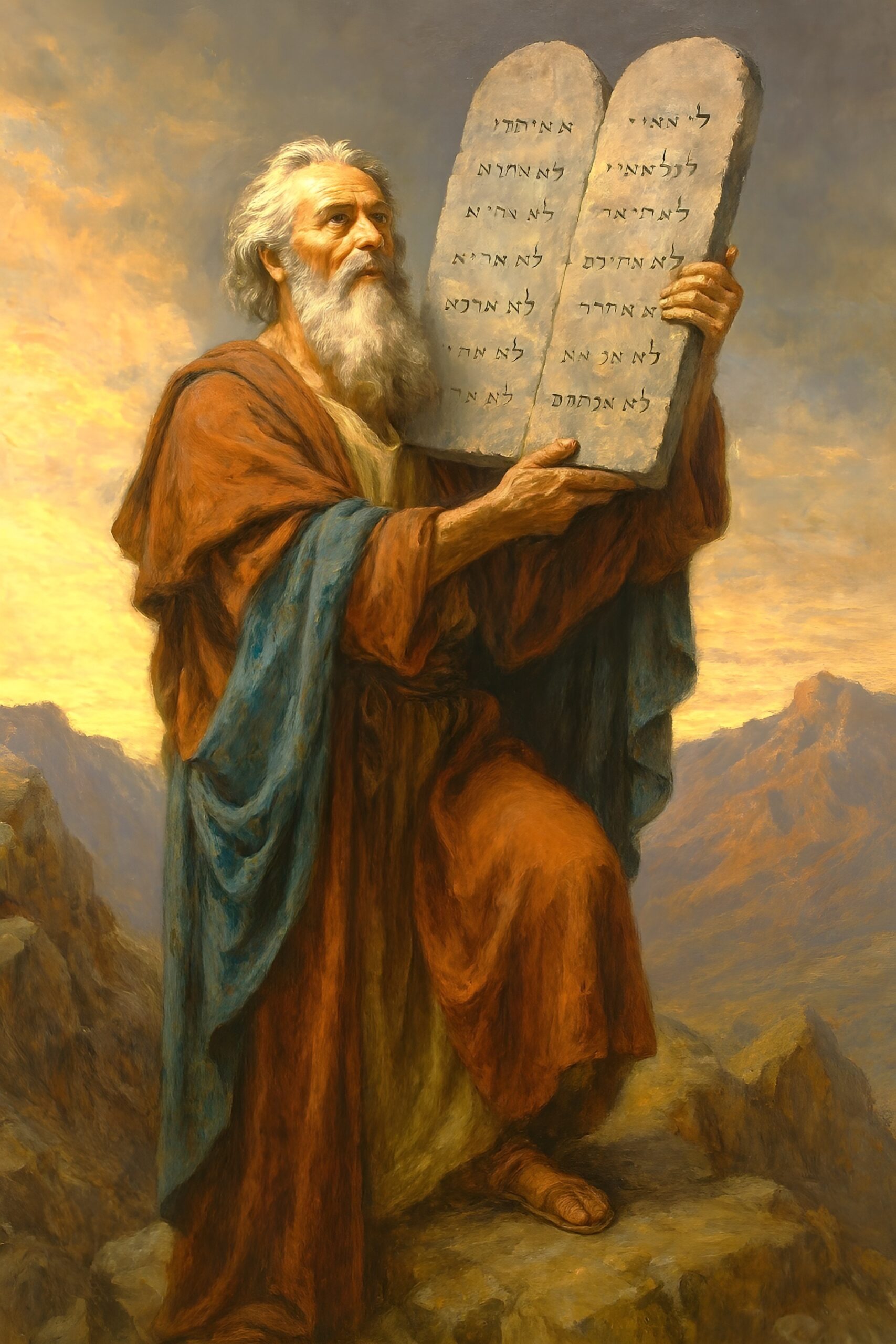
The Influence of Politics
From a modern academic and historical-critical perspective—the differences between the two sets of commandments does reflect differing theological, historical, and political motives of the various authors and editors (or ‘schools’) who wrote and compiled the Torah over the centuries.
Rather than viewing the text as a single, unified document written by one person in real time, biblical scholars use tools like the Documentary Hypothesis to analyze how the text was assembled from distinct regional and political traditions.
The existence of a second, radically different set of laws (the Ritual Decalogue in Exodus 34) can be understood when viewed through political and historical perspectives.
– Merging Rival Regional Traditions (Northern vs. Southern Politics)
Ancient Israel was comprised of different tribes and, later, two distinct kingdoms: the Kingdom of Israel (North) and the Kingdom of Judah (South).
Different regions preserved their own foundational legal traditions and covenant stories. When scribes later combined these traditions into a single national epic (the Torah), they didn’t erase the contradictions. Instead, they wove them together. The ‘Ethical Decalogue’ (Exodus 20) and the ‘Ritual Decalogue’ (Exodus 34) represent independent legal traditions from different groups and eras that political editors sought to harmonize under the unified banner of Moses at Mt. Sinai.
– The Centralization of Power and Temple Priesthood (The Priestly Motive)
The second set of commandments (Exodus 34) is intensely focused on ritual purity, agricultural festivals, sacrifices, and prohibitions against pagan altars. Scholars note that these shifts heavily reflect the interests of the priesthood.
During periods of religious reform in ancient Judah (such as under King Josiah), and during the post-exilic period when the Temple in Jerusalem was being rebuilt, establishing strict control over worship, holy days, and tithes was a vital political and economic necessity to enforce proper ritual compliance that helped solidify the authority of the priesthood.
Some scholars argue that specific commands—such as the fierce prohibition against cast-metal idols—were targeted political polemics against the religious policies of historical figures, such as King Jeroboam I of the Northern Kingdom, who had set up golden calves at royal sanctuaries (Dan and Bethel) to consolidate his own political power and keep people from traveling to Jerusalem to worship. Writing these laws back into the ‘Sinai’ narrative served as a retroactive theological condemnation of rival political regimes.
Modern mainstream historians and biblical scholars generally doubt the historical existence of Moses as depicted in the Bible. From an academic and archaeological standpoint, Moses is widely viewed as a legendary or ‘mythic-heroic’ figure rather than a verifiable historical person.
Modern historical-critical scholarship dates the composition of Exodus to the Babylonian Exile (586–538 BCE). When the elite of Judah were exiled to Babylon, they faced a massive identity crisis. They had lost their land, their king, and their Temple. To preserve their heritage, scribes gathered earlier oral traditions, folk tales, local laws, and sources from Babylonian and Sumerian mythology, weaving them into a unified national epic. The text received its final polish and canonical shape during the Persian period (roughly the 5th century BCE).
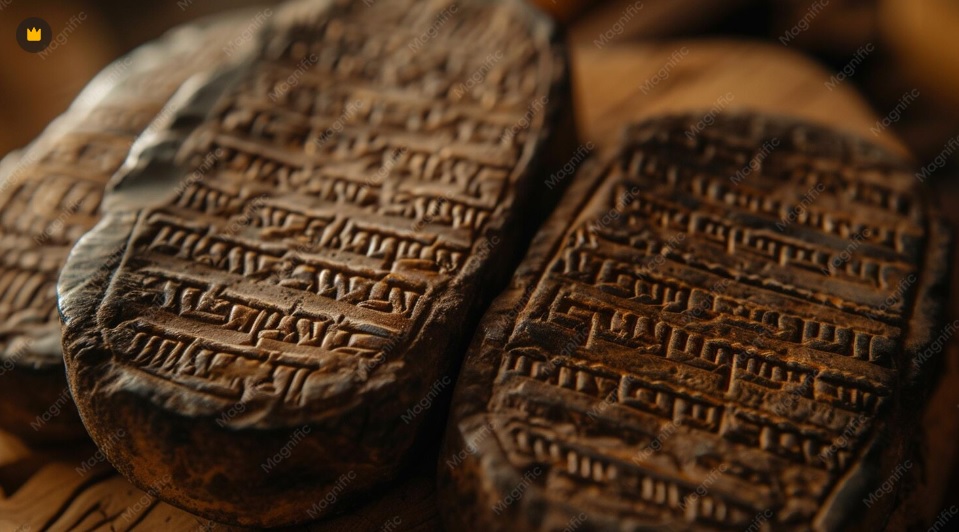
Origin of the Ten Commandments
The Ten Commandments were not ‘copied’ word-for-word from Babylonian texts. The underlying legal structures, phrasing styles, and cultural concepts were heavily drawn from older Mesopotamian (Babylonian and Sumerian) legal traditions that predated the Bible by several centuries.
Long before the Torah was compiled, empires in Mesopotamia carved civil and ritual codes into stone monuments. The most famous of these are the Code of Hammurabi (circa 1750 BCE) and even older codes, such as the Code of Ur-Nammu and the Laws of Eshnunna.
Among the surviving laws are :
- If a man commits a murder, that man must be killed.
- If a man commits a robbery, he will be killed.
- If a man commits a kidnapping, he is to be imprisoned and pay 15 shekels of silver.
- If a slave marries a slave, and that slave is set free, he does not leave the household.
- If a slave marries a native [i.e. free] person, he/she is to hand the firstborn son over to his owner.
- If a man violates the right of another and deflowers the virgin wife of a young man, they shall kill that male.
- If the wife of a man followed after another man and he slept with her, they shall slay that woman, but that male shall be set free.
- If a man proceeded by force, and deflowered the virgin female slave of another man, that man must pay five shekels of silver.
- If a man divorces his first-time wife, he shall pay (her) one mina of silver.
- If it is a (former) widow whom he divorces, he shall pay (her) half a mina of silver.
- If the man had slept with the widow without there having been any marriage contract, he need not pay any silver.
- If a man is accused of sorcery [translation disputed], he must undergo ordeal by water; if he is proven innocent, his accuser must pay 3 shekels.
- If a man accused the wife of a man of adultery, and the river ordeal proved her innocent, then the man who had accused her must pay one-third of a mina of silver.
- If a prospective son-in-law enters the house of his prospective father-in-law, but his father-in-law later gives his daughter to another man, the father-in-law shall return to the rejected son-in-law twofold the amount of bridal presents he had brought.
- If [text destroyed], he shall weigh and deliver to him 2 shekels of silver.
- If a slave escapes from the city limits, and someone returns him, the owner shall pay two shekels to the one who returned him.
- If a man knocks out the eye of another man, he shall weigh out half a mina of silver.
- If a man has cut off another man’s foot, he is to pay ten shekels.
- If a man, in the course of a scuffle, smashed the limb of another man with a club, he shall pay one mina of silver.
- If someone severed the nose of another man with a copper knife, he must pay two-thirds of a mina of silver.
- If a man knocks out a tooth of another man, he shall pay two shekels of silver.
- [text destroyed] If he does not have a slave, he is to pay 10 shekels of silver. If he does not have silver, he is to give another thing that belongs to him.
- If a man’s slave-woman, comparing herself to her mistress, speaks insolently to her, her mouth shall be scoured with 1 quart of salt.
- If a slave woman strikes someone acting with the authority of her mistress … (no additional surviving text).
- If a man appeared as a witness, and was shown to be a perjurer, he must pay fifteen shekels of silver.
- If a man appears as a witness, but withdraws his oath, he must make payment, to the extent of the value in litigation of the case.
- If a man stealthily cultivates the field of another man and he raises a complaint, this is however to be rejected, and this man will lose his expenses.
- If a man flooded the field of a man with water, he shall measure out three kurof barley per iku of field.
- If a man had let an arable field to a(nother) man for cultivation, but he did not cultivate it, turning it into wasteland, he shall measure out three kurof barley per iku of field.
– The Legal Format (The ‘Casuistic’ Style)
While the Ten Commandments are framed as absolute short commands (‘You shall not…’), the broader legal codes that immediately follow them in the Bible (such as the Covenant Code in Exodus 21–23) use the exact same formulaic style as Babylonian laws:
Babylonian (Code of Hammurabi): ‘If a man put out the eye of another man, his eye shall be put out.’
Biblical (Exodus 21:24): ‘Eye for eye, tooth for tooth, hand for hand…’
Structure: Both use the conditional ‘If… then…’ format common to ancient Near Eastern jurisprudence.
– The Genre: Divine Kingship and Stele Presentation
The literary staging of the biblical laws mirrors Babylonian royal propaganda:
The Babylonian Parallel: King Hammurabi had his laws inscribed on a massive black stone pillar (stele). At the top of the stone is a carved relief showing Hammurabi receiving the laws directly from Shamash, the Babylonian sun god and god of justice.
The Biblical Parallel: Moses goes up a mountain to receive stone tablets written by the ‘finger of God’.
The Connection: In the ancient world, it was standard political practice to claim that a nation’s laws came directly from a deity to give them ultimate, unquestionable authority.
– Shared Prohibitions and Moral Baselines
Many basic societal rules found in the commandments, such as prohibiting murder, theft, false testimony, and dishonoring parents, were universal legal standards across the ancient Near East because no functional society could survive without them. However, specific legal protections (such as how to treat slaves, handle stolen property, or manage goring oxen) found in the Torah show a direct literary line of descent from Babylonian and Sumerian precedents that circulated in the Levant for centuries.
What Makes the Biblical Version Different?
While the legal framework was borrowed from the surrounding ancient Near Eastern culture, Israelite scribes adapted these laws to fit a unique theological framework during the Babylonian Exile:
| Feature | Babylonian Codes (e.g., Hammurabi) | Biblical Code (Torah) |
| Source of Law | Given by the gods to a human king (who acts as the enforcer). | Given by God directly to an entire community/nation. |
| Social Equality | Punishments varied drastically based on social class (nobles vs. commoners vs. slaves). | Theoretically applied equal punishments regardless of social standing (though still patriarchal). |
| Religious vs. Civil | Focused heavily on commercial trade, contracts, property, and royal decrees. | Tied civil laws directly to theological loyalty, monotheism, and ethical holiness (“I am the Lord”). |
Rather than a verbatim copy, the biblical legal tradition represents a creative rewriting of older Babylonian and Mesopotamian legal wisdom, reframed to help a displaced people forge a distinct identity under a single deity.
Conclusion
The Book of Exodus and the Torah were designed to unify captive Israelites from Babylonian bondage and maintain cultural traditions. That cohesion was attributed to a fictional Moses and the finger of God, which had been adopted later by Christian fathers. Although the known Ten Commandments may have had their origin in Mesopotamian lore, their moral imperatives still have validity. However, it is important that people understand their origins, rather than blindly accepting Exodus and Deuteronomy as God’s words.